Base preparation
Grading, base work and compaction under new roads and rebuilt sections.


ROAD PAVING / ACCESS ROADS / MUNICIPAL STREETS
Access roads, commercial drives, community streets and public roads. Our team plans the base, the asphalt and the drainage for the traffic the road will carry.
01 / WHAT WE PAVE
Roads carry more weight, more often, than most parking lots. Trucks, buses and steady traffic punish a weak base or a poorly drained edge. Our team looks at the existing road, the subgrade, the crown and the ditches or drains before we define the paving work.
We pave new roads, resurface worn ones and rebuild failed sections for property owners, developers, contractors and public agencies. Where a project comes with plans and specifications, our team works to them.
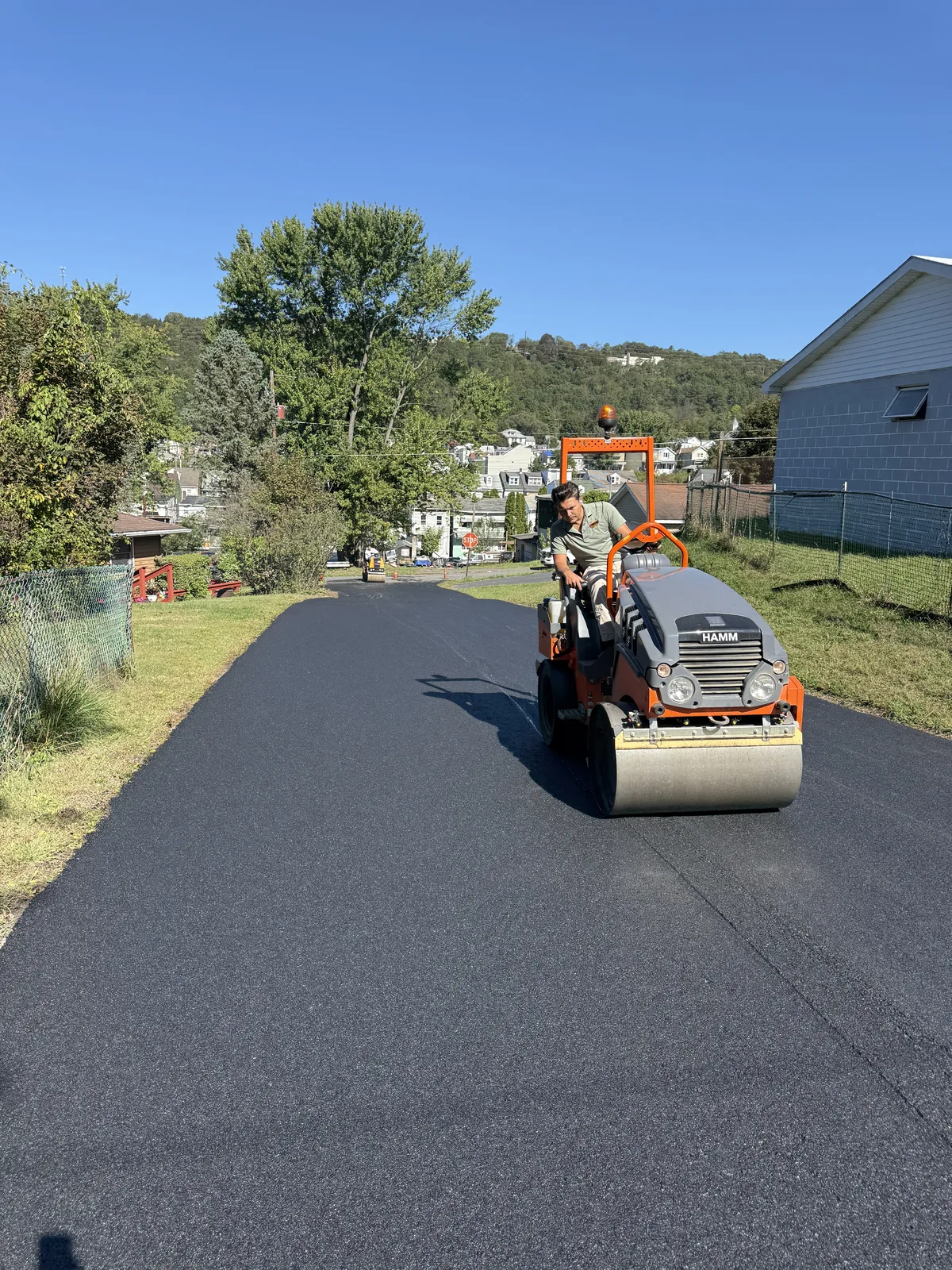
02 / WHAT’S INCLUDED
Every proposal is written for the property. Typical scope items include:
Grading, base work and compaction under new roads and rebuilt sections.
Placement and compaction of asphalt for new roads and widening.
Milling worn surfaces and paving a new surface course at the right grades.
Clean transitions to existing roads, driveways and parking areas.
Crown, cross slope and edge drainage reviewed as part of the scope.
Work phased to keep traffic moving, with lane closures planned in advance.
03 / GULF COAST CONDITIONS
Many Gulf Coast roads sit on low, wet ground, and standing water at the edge of a road is one of the fastest ways to lose it. Heat softens asphalt under heavy loads. Our team pays close attention to the crown, the edge drainage and the base so water leaves the road and the surface holds up through summer heat and hurricane-season rain.
Our team brings a combination of 50+ years of experience to that planning.
04 / THE PROCESS
Existing conditions, traffic, drainage and any plans or specifications.
A written scope covering base, asphalt, milling, tie-ins and phasing.
Prepare, pave and compact in planned sections to keep traffic moving.
Tie-ins, cleanup and a final walkthrough.
05 / WHO IT’S FOR
Helping property managers with thousands of properties across the Gulf Coast.
Access roads, truck routes and internal roads on large properties.
New streets in commercial and residential developments.
Public roads, where our team works to the agency’s plans and specifications.
Managing several properties? For property managers
BEFORE THE WORK
Our team works on public-sector roadway projects when they are offered through the agency’s process and with its plans and specifications. Call our team to talk about a specific project.
Often, yes. When the base is sound, milling and a new surface course may be enough. Our team checks the base first.
Work is phased by lane or section where possible, with closures planned and set out in the proposal.
Our team reviews the crown, cross slope and edges as part of the scope, and can include drainage work where it is needed.
The address, the length of road involved, how it is used (cars, buses, trucks), photos of the worst areas, and any plans or past work records you have. Our team uses that to plan the walkthrough and the questions to answer on site.
Yes. Owners often split a long road into phases that fit their budget. Our team can rank the sections by condition so the worst stretches are handled first and the plan for the rest is written down.
START WITH THE PROPERTY
Tell our team about the property. Photos, an approximate size and your timing help us define the work.
Start with the site. Our team will review the scope.