Truck courts and yards
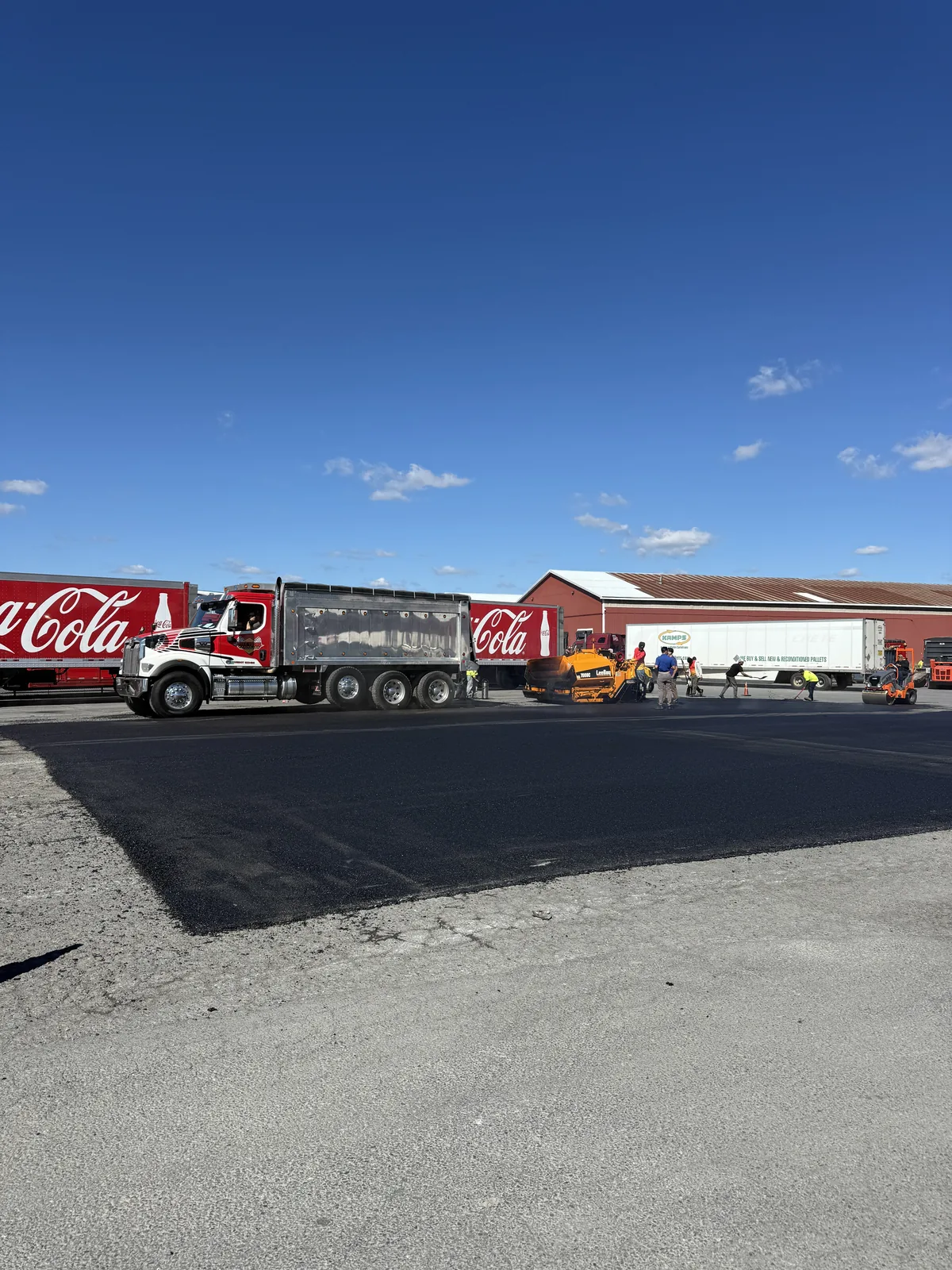
Paving and resurfacing for trailer parking, truck courts and storage yards.


INDUSTRIAL PAVING / YARDS / TRUCK COURTS
Truck courts, laydown yards, warehouse lots and plant roads take loads that would break an ordinary parking lot. Our team plans the base and the pavement around the trucks and equipment that will use it.
01 / HEAVY USE
Industrial pavement fails where heavy loads stop, turn and sit: dock aprons, gate entries, turning areas and trailer parking. A section that works for cars will rut and crack quickly under loaded trucks. Our team looks at how the site is used, where the heaviest traffic goes and how water drains before we define the base and pavement.
Industrial work often has to happen while the site keeps running. Our team plans the work in phases around shifts, deliveries and loading schedules.
02 / WHAT’S INCLUDED
Every proposal is written for the property. Typical scope items include:
Paving and resurfacing for trailer parking, truck courts and storage yards.
Internal roads and entrances built for heavy traffic.
Asphalt at dock approaches, with concrete pads or aprons where the site calls for them.
Base repair and stabilization where soft ground is causing failures.
Resurfacing worn industrial pavement at controlled grades.
Work sequenced around shifts, gates and deliveries.
03 / GULF COAST CONDITIONS
Much of the Gulf Coast’s industrial base sits on low, wet ground near rivers, ports and the coast. Heat softens asphalt under standing loads, and water trapped in the base speeds rutting. Our team pays attention to the base, drainage and the pavement section in the heaviest-use areas, and recommends concrete where asphalt is the wrong material for the load.
Our team brings a combination of 50+ years of experience to that planning.
04 / THE PROCESS
Traffic patterns, load areas, drainage and existing failures.
A written scope for base, pavement and any concrete areas.
A schedule built around shifts, gates and loading.
Pave, compact and return each area to service on schedule.
05 / WHO IT’S FOR
Helping property managers with thousands of properties across the Gulf Coast.
Truck courts, trailer parking and dock approaches.
Plant roads, laydown yards and parking.
Industrial parks and flex buildings with shared truck areas.
Managing several properties? For property managers
BEFORE THE WORK
It depends on the loads and how they move. Asphalt works well for many yards and roads. Concrete can be better at dock aprons and where heavy loads sit. Our team will tell you what we recommend and why.
Usually, yes. Our team phases the work so gates, docks and critical routes stay open where possible.
Often a base that is too weak or too wet for the loads, or asphalt softening under standing loads in the heat. Our team checks the cause before recommending a fix.
Yes. Our team follows the site’s access and safety requirements. Share them with us at the walkthrough.
Our team asks about shift times, delivery windows and the routes trucks take through the site, then phases the work so the busiest areas are handled when they are least used. The plan is written into the proposal.
START WITH THE PROPERTY
Tell our team about the property. Photos, an approximate size and your timing help us define the work.
Start with the site. Our team will review the scope.