Ponding and low-spot correction
Removing and repaving low areas to grades that drain.


DRAINAGE / CATCH BASINS / PONDING WATER
Standing water is the fastest way to lose a parking lot in a region that gets as much rain as the Gulf Coast. Our team finds where water collects and why, and fixes the grades, drains and edges that cause it.
01 / WATER IS THE PROBLEM
When water sits on asphalt, it seeps into cracks and softens the base. Traffic then pushes the weakened area down, the low spot gets deeper and holds more water, and the cycle repeats. Ponding also creates slip hazards and complaints from tenants and customers.
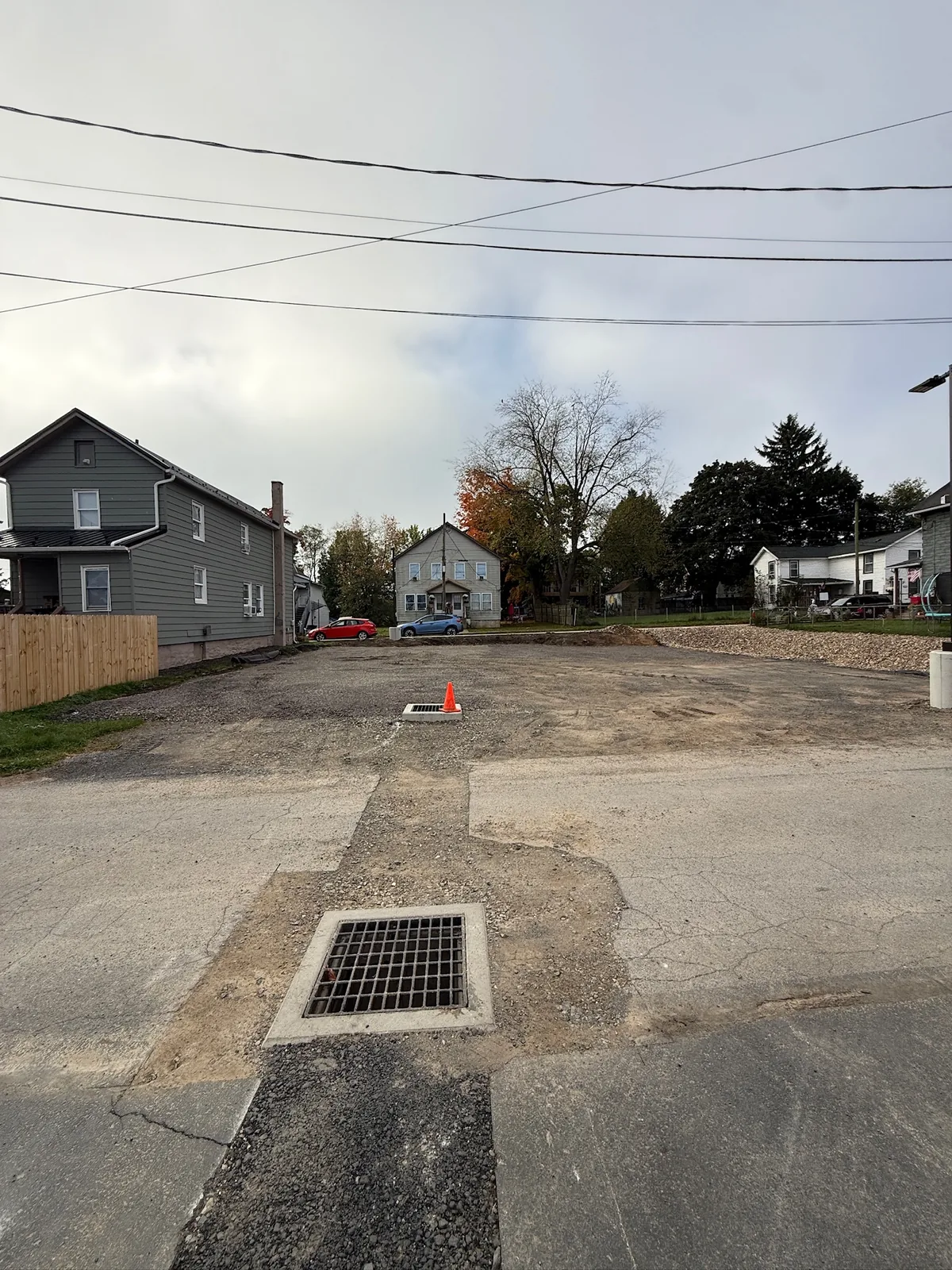
Drainage work is about getting water off the pavement and into the drainage system. That can mean regrading a low area, rebuilding a catch basin, adding a swale or fixing the edge where pavement meets grass.
02 / WHAT’S INCLUDED
Every proposal is written for the property. Typical scope items include:
Removing and repaving low areas to grades that drain.
Repairing settled, broken or sunken catch basins and the pavement around them.
Shaping swales and channels that carry water where it should go.
Fixing edges and curb lines where water sits or undercuts the pavement.
Correcting grades during repairs and overlays so water moves.
03 / GULF COAST CONDITIONS
Southeast Louisiana and the Gulf Coast get heavy rainfall, and much of the region is flat, low-lying ground that drains slowly. Some communities have flooded badly in recent decades. A parking lot cannot change regional flooding, but it can be built so ordinary rain leaves the surface quickly. Our team looks at the whole path of the water, from the roof drains to the inlets, before we propose a fix.
Our team brings a combination of 50+ years of experience to that planning.
04 / THE PROCESS
Walk the lot, ideally after rain, and photograph where water stands.
Grades, settled inlets, blocked paths or failed edges.
A written scope for regrading, drain repairs or swales.
Do the work, then check the result in the next rain.
05 / WHO IT’S FOR
Helping property managers with thousands of properties across the Gulf Coast.
Lots with recurring tenant complaints about standing water.
Streets and common areas where water collects at curbs.
Entrances, docks and drive lanes where ponding causes damage and hazards.
Managing several properties? For property managers
BEFORE THE WORK
Often, yes. Low areas can be removed and rebuilt to drain, and settled inlets can be rebuilt. Our team looks for the smallest fix that solves the problem.
Yes. Our team can rebuild the area around a settled catch basin and repave it to drain.
Our team handles surface drainage around pavement. Larger stormwater systems are designed by an engineer, and our team can work from those plans.
During or right after rain. Photos of standing water are very helpful when you send the request.
Photos taken during or right after a heavy rain are the most useful, showing where water stands and how deep it gets. Wider shots that show the drains, curbs and slope around the problem area help our team plan the walkthrough.
START WITH THE PROPERTY
Tell our team about the property. Photos, an approximate size and your timing help us define the work.
Start with the site. Our team will review the scope.